A Cruz Celta costuma intimidar iniciantes. Dez cartas, um esquema que parece estranho na mesa, muitos detalhes. Ao mesmo tempo, esse é o espalhamento que aparece com mais frequência em livros sobre tarot e em vídeos online.
O tarot costuma associar-se a perguntas mais amplas. A Cruz Celta reflete bem esse enfoque, porque mostra não só a resposta, mas também o pano de fundo da situação, tensões, recursos e possíveis direções. É mais um mapa do que um simples sinal sim/não.
Se até agora usas principalmente espalhamentos simples, por exemplo três cartas ou uma pergunta rápida em /sanctuary/tarot, a Cruz Celta pode ser o próximo passo. Dá para dominá-la, mesmo com o primeiro baralho e no primeiro diário de tarot.
Em resumo: a Cruz Celta é um espalhamento clássico de 10 cartas que mostra um quadro completo da situação, incluindo presente, passado, futuro e recursos. A instrução é direta: define a pergunta, depois coloca as cartas em ordem, seguindo o esquema na mesa. Cada posição tem um significado, e a interpretação consiste em conectar as cartas em eixos: temporal, tensão e apoio. No fim obtém-se um cenário provável, não um veredito. Esse cenário pode ser conscientemente cocriado.
1. Cruz Celta: o que é este espalhamento e para que serve de fato
Clássico do tarot. A Cruz Celta é um dos espalhamentos mais antigos e populares na tradição do tarot. Arthur Edward Waite já o descreveu no começo do século XX. Não há evidências de ligação com os Celtas históricos. O nome é mais marketing do que fato histórico.
Espalhamento para temas maiores. A Cruz Celta funciona melhor quando a pergunta envolve uma situação complexa. Por exemplo:
- uma relação com muitos elementos em jogo
- mudança de trabalho ou reorientação profissional
- mudança de residência, mudança de país, decisões de grande impacto
- um conflito de longa duração, que se arrasta por meses ou anos
Em vez de um curto sim/não, a Cruz Celta mostra como a situação pode evoluir, o que a impulsiona, onde estão os bloqueios e quais opções existem.
Mapa, não destino. A tradição do tarot pode ser fatalista, mas a abordagem atual, também na Zorynthia, trata a Cruz Celta como uma ferramenta de reflexão. A carta na posição futuro não é um veredito, é o cenário mais provável se nada mudar.
Se quiser ver como essa abordagem funciona na prática, leia como o tarot influencia a vida. Lá tratamos as cartas mais como uma conversa do que como uma previsão.
2. Quando usar a Cruz Celta e quando escolher um espalhamento mais simples
Escolha a Cruz Celta quando:
- o tema for multifacetado e emocionalmente importante
- sentires que estás num ponto de escolha, mas sem saber exatamente para onde
- quiseres ver o pano de fundo, não apenas o que vai acontecer
- tiveres um momento de calma e puderes dedicar ao espalhamento pelo menos 20 a 30 minutos
Fica com espalhamentos mais simples quando:
- a pergunta for muito concreta, por exemplo ‘o que é melhor fazer esta semana sobre X’ (aqui costuma bastar o espalhamento de 3 cartas ou uma pergunta rápida em /sanctuary/tarot)
- estás a aprender o baralho e ainda te perdes nos significados
- não tens tempo para anotações e reflexão calma
Boa prática para iniciantes. No começo, usa a Cruz Celta apenas para 1 ou 2 perguntas importantes por mês. Para os outros temas, escolhe estruturas mais simples. Assim não te sobrecarregas com informação e não desanimas nas primeiras tentativas.
3. Preparação para o espalhamento: pergunta, baralho, espaço, notas
- Pergunta:
Perguntas abertas, porém concretas, funcionam melhor. Em vez de ‘Ele volta’, experimenta: ‘O que vale a pena compreender sobre esta relação e o meu papel nela’, ‘Que direção de ação me fortalece mais nesta situação’.
Evita perguntas sobre saúde, diagnóstico e questões legais. O tarot, também na Zorynthia, é entretenimento e inspiração para reflexão. Não é ferramenta médica, legal nem financeira.
- Baralho:
Para começar, funciona bem um estilo clássico, por exemplo o inspirado em Rider-Waite-Smith. As ilustrações são claras e cheias de símbolos. Na Zorynthia podes ver vários baralhos e escolher um que te agrade visualmente.
Se usas um baralho físico, embaralha com calma, algumas vezes. Se usas /sanctuary/tarot, a aplicação tira as cartas por ti, mas ainda assim dedica um momento ao foco.
- Espaço:
Precisa-se de um pedaço de mesa ou chão onde caibam dez cartas em duas áreas: a cruz e a coluna. Mantém uma organização mínima: silencia notificações, afasta o laptop, prepara um caderno ou app de notas.
- Notas:
Regista a pergunta, a data e a lista sumária das cartas com as posições. Assim podes voltar ao espalhamento daqui a uma semana ou mês e ver o que se confirmou e o que foi metáfora.
4. Disposição das cartas passo a passo: ordem das 10 posições e esquema na mesa
Existem várias versões da Cruz Celta. Aqui descrevo a mais popular, usada também em muitos espalhamentos virtuais.
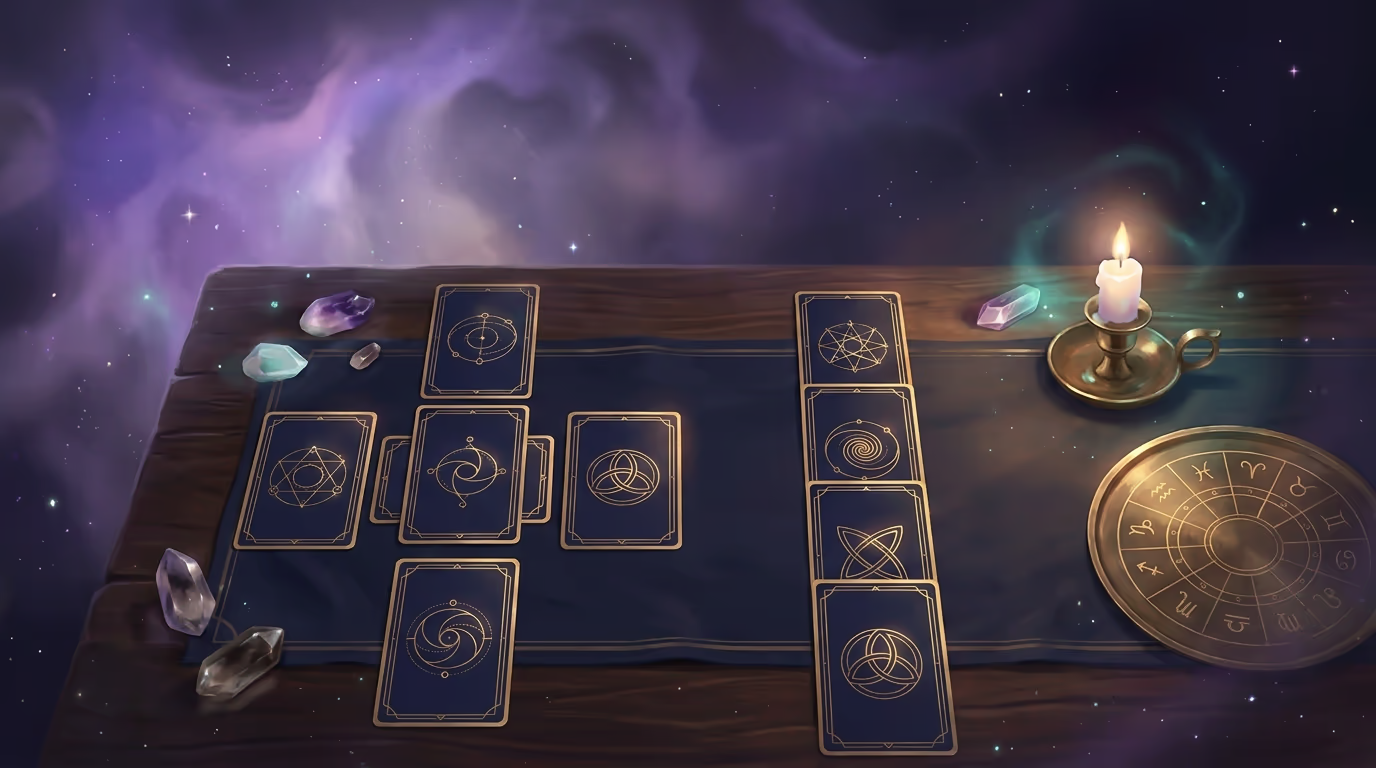
Imagina uma mesa. À esquerda forma-se a cruz com seis cartas. À direita fica a coluna vertical com quatro cartas.
Ordem para colocar as cartas:
- Carta 1: centro da cruz, em baixo
- Carta 2: sobre a cruz, horizontal sobre a carta 1
- Carta 3: acima da carta 1
- Carta 4: abaixo da carta 1
- Carta 5: à esquerda da carta 1
- Carta 6: à direita da carta 1
- Carta 7: à direita da cruz, base da coluna
- Carta 8: acima da carta 7
- Carta 9: acima da carta 8
- Carta 10: acima da carta 9
Podes desenhar um esquema simples no caderno e numerar os campos. Depois de algumas leituras, a disposição entra no hábito.
Se usas /sanctuary/tarot, a aplicação mostra as posições no ecrã, o que facilita lembrar o que cada carta significa. O esquema, porém, é o mesmo, independentemente do baralho e do local.
5. Significado de cada posição na Cruz Celta: da carta 1 à 10
Neste variante, cada uma das dez cartas tem um papel definido.
Carta 1: Situação agora Mostra o estado atual do assunto ou a tua postura presente em relação ao tema.
Carta 2: O que atravessa a situação Cobre a carta 1, mostra o desafio principal, um obstáculo ou o tema que ‘cruza’ as tuas ações. Às vezes é também uma oportunidade que exige esforço.
Carta 3: Consciência, o que está em cima O que percebes claramente. Objetivos conscientes, esperanças, medos, o modo como pensas sobre a situação.
Carta 4: Raiz, o que está por baixo Contexto profundo da situação. Motivações ocultas. Às vezes experiências passadas que ainda influenciam o que acontece.
Carta 5: Passado Eventos recentes que já ocorreram e impactam o presente. Normalmente refere-se aos últimos meses.
Carta 6: Futuro próximo O que pode surgir em breve, se não mudares a abordagem. Horizonte de semanas a meses, conforme a pergunta.
Carta 7: Tu na situação Tua atitude, energia e modo de agir nessa história.
Carta 8: Ambiente Outras pessoas, circunstâncias externas, o clima à tua volta. Às vezes indica como os outros te vêem.
Carta 9: Esperanças e medos O que desejas e o que receias, muitas vezes misturado num só símbolo. Mostra como expectativas influenciam decisões.
Carta 10: Resultado potencial A direção mais provável para a qual a situação caminha, se tudo permanecer como está. Não é um destino fixo, é um cenário.
Os nomes das posições podem variar entre escolas. O importante é manter um esquema consistente no teu diário. Assim verás com o tempo como esse variante trabalha contigo.
6. Como conectar as cartas entre si: eixo temporal, tensão e apoio
Descrever cada posição é apenas metade do trabalho. A outra metade é observar as relações entre as cartas.
Eixo temporal:
- passado (carta 5)
- presente (cartas 1 e 2)
- futuro próximo (carta 6)
- resultado potencial (carta 10)
Observa como a história se desenrola. Há tendência ao alívio ou ao aumento de tensão. O resultado (10) é consequência lógica do que está visível, ou uma surpresa?
Eixo de tensão:
- carta 1 contra carta 2
Este par aponta o conflito principal ou o desafio. Por exemplo, carta 1 Justiça, carta 2 Diabo. Interpretação possível: desejo de manter regras choca com tentações por atalhos.
Eixo interno:
- carta 3 (consciência)
- carta 4 (raiz)
- carta 7 (tu na situação)
- carta 9 (esperanças e medos)
Este é o teu panorama interno. Vê onde te apoias e onde te sabotas.
Eixo externo:
- carta 5 (passado)
- carta 6 (futuro próximo)
- carta 8 (ambiente)
- carta 10 (resultado)
Isto é o que está fora: eventos, outras pessoas, circunstâncias. Compara com o eixo interno. A tua postura ajuda ou entra em conflito com a realidade?
Na Zorynthia, depois de espalhares as cartas em /sanctuary/tarot, podes alternar entre ver cada carta isolada e a descrição do espalhamento completo. Isso ajuda a visualizar os eixos, sobretudo no início.
7. Leitura exemplo da Cruz Celta numa pergunta concreta
Segue um exemplo passo a passo. Suponha a pergunta:
‘Que direção de ação me fortalece mais na mudança de trabalho nos próximos meses’
Imagina que saíram estas cartas:
- Situação agora: Oito de Ouros
- O que atravessa: Nove de Espadas
- Consciência: Três de Paus
- Raiz: Oito de Espadas
- Passado: Quatro de Copas
- Futuro próximo: Carruagem
- Tu na situação: Rainha de Ouros
- Ambiente: Sete de Copas
- Esperanças e medos: O Louco
- Resultado potencial: O Sol
Carta 1: Oito de Ouros Estás num processo de aperfeiçoamento, aprendizagem intensa. Pode ser um curso, novas responsabilidades, projetos adicionais.
Carta 2: Nove de Espadas O maior obstáculo são os medos e os piores cenários. É uma carta de insônia e ruminação. Não aponta necessariamente um perigo real, mas como os pensamentos alimentam a ansiedade.
Carta 3: Três de Paus Conscientemente olhas para o futuro e pensas em expansão, talvez mudança de área ou deslocamento. Há curiosidade e vontade de avançar.
Carta 4: Oito de Espadas No fundo há uma crença de ‘não ter saída’, ‘estar preso neste trabalho’. É mais uma prisão mental do que circunstâncias reais.
Carta 5: Quatro de Copas Nos últimos meses cresceu o tédio. Ofertas que surgiram não entusiasmaram. Talvez rejeitaste oportunidades por hábito, por achá-las repetidas.
Carta 6: Carruagem Futuro próximo indica movimento. Surge uma oportunidade concreta: entrevista, projeto que pode ser a saída. A Carruagem fala de foco e tomar o leme.
Carta 7: Rainha de Ouros Nessa situação mostras-te como alguém que cuida da estabilidade e da prática. Tens recursos e experiência para oferecer. É um sinal positivo para questões profissionais.
Carta 8: Sete de Copas O ambiente está um pouco caótico. Muitas opções, algumas ilusórias. Podes receber sinais contraditórios de empregadores ou contactos.
Carta 9: O Louco Há desejo por um novo começo, e também medo de saltar para o desconhecido. O Louco combina liberdade e risco. Se este arquétipo te interessa, vê sobre a carta O Louco.
Carta 10: O Sol Resultado potencial é clareza e escolha consciente. Não significa trabalho perfeito, mas um período em que vês com nitidez o que te serve. Frequentemente indica sucesso e sensação de que o esforço valeu a pena.
Como ligar numa resposta à pergunta:
A direção que te fortalece é sair da prisão mental (Oito de Espadas) por meio de ação concreta (Carruagem), baseada nas tuas competências práticas (Rainha de Ouros), e não nos medos (Nove de Espadas) nem em sonhos sem plano (Sete de Copas). O Louco sugere que o novo passo pode ser inusitado, mas O Sol aponta para um desfecho claro e satisfatório.
Nenhuma carta diz ‘faz X ou Y’ de forma direta. Elas mostram como pensas, o que te bloqueia e onde há potencial para agir.
8. Erros típicos com a Cruz Celta e como evitá-los
Muita informação de uma vez. Iniciantes tentam extrair todos os possíveis detalhes do espalhamento de imediato. O resultado é confusão. Começa por um resumo curto de 3 a 5 frases. Depois aprofunda os pontos.
Ignorar a pergunta. A Cruz Celta convida a ‘ver tudo’. É fácil perder a ligação com a pergunta inicial. Mantém a pergunta escrita ao lado e consulta-a ao interpretar cada carta.
Focar só na carta 10. Muita gente olha apenas para o resultado e trata as outras cartas como enfeite. O maior valor da Cruz Celta está no que ocorre entre as cartas, não só no final.
Aterrorizar-se com cartas difíceis. Cartas como Torre, A Morte ou Diabo assustam. Em vez de imaginar o pior, observa a posição. Por exemplo, A Morte na posição 4 pode indicar uma transformação profunda interna, não ‘o fim de tudo’. Se essa carta inquietar, lê mais em sobre a carta A Morte.
Fazer vários cruzamentos seguidos sobre o mesmo tema. Isso tende a gerar confusão. Se um espalhamento não parece satisfatório, em vez de repetir a mesma pergunta, faz anotações, coloca uma questão de follow up com um espalhamento mais simples ou usa um breve spread em /sanctuary/tarot para esclarecer um ponto.
9. Como fazer a Cruz Celta com ajuda de IA na Zorynthia
Se preferes um ‘parceiro de conversa’ com as cartas, podes usar a Zorynthia como apoio. A aplicação não decide por ti. Ajuda a nomear o que já sentes e a organizar significados.
Como funciona na prática:
- Entra em /sanctuary/tarot e escolhe o espalhamento de 10 cartas. Se houver uma variante chamada Cruz Celta, o esquema seguirá este descrito.
- Escreve ou regista no app a tua pergunta. Quanto mais concreta, mais fácil depois ler a resposta.
- A Zorynthia tira as cartas e coloca nas posições. No ecrã verás qual carta é a ‘situação agora’, qual é o ‘obstáculo’, e qual é o ‘futuro’.
- Pede à IA uma explicação de cada carta no contexto da tua pergunta. Por exemplo: ‘Explica a carta 2 neste espalhamento, como ela influencia a mudança de trabalho’.
- Quando tiveres conclusões, pede um resumo do espalhamento em 5 a 7 frases. Usa esse resumo como proposta de interpretação que podes ajustar.
Se estás a começar e não tens baralho físico, regista uma conta em Zorynthia em registo na Zorynthia. Os espalhamentos disponíveis, incluindo variantes da Cruz Celta, permitem praticar sem comprar cartas físicas.
10. Cruz Celta e outros espalhamentos e ferramentas na Zorynthia
A Cruz Celta é um dos instrumentos disponíveis. Às vezes um olhar mais leve ou diferente é mais útil.
Espalhamentos mais simples. Para questões rápidas usa o espalhamento de três cartas, descrito em Espalhamento de 3 cartas. Em /sanctuary/tarot há também spreads mais curtos, por tema, por exemplo para relações ou decisões.
Astrologia como contexto. Se queres ver como trânsitos planetários podem influenciar decisões, pergunta sobre o teu mapa em /sanctuary/astrology. Lá a IA explica o que acontece no céu no teu mapa natal.
Para contexto mais geral, olha o /sanctuary/horoscope, e se o tema for comunicação, viagens ou contratos, vê retrogradação de Mercúrio em 2026.
Regras e privacidade. Ao usar a Zorynthia podes ler os termos e a política de privacidade para entender como a aplicação funciona e que dados são processados.
11. Como treinar a interpretação da Cruz Celta no dia a dia
A Cruz Celta não pede ocasiões especiais. Treina com assuntos menores, desde que escolhidos com sentido.
Sugestões práticas:
- faz uma Cruz Celta por mês sobre o teu próximo mês
- depois de um evento importante, revisita as notas e compara o que as cartas disseram com o que aconteceu
- compara a tua leitura com a proposta da IA em /sanctuary/tarot e destaca diferenças
- escolhe uma posição difícil, por exemplo a carta 9, e trabalha a sua interpretação por semanas
Com o tempo verás a Cruz Celta não como 10 imagens separadas, mas como uma história com começo, meio e possível desfecho.
12. Perguntas frequentes sobre a Cruz Celta
É preciso conhecer todos os significados das cartas para fazer a Cruz Celta? Não. Basta ter noções básicas e vontade de usar referências, por exemplo livros, notas ou a IA da Zorynthia. O essencial é manter o esquema de posições e uma pergunta clara.
Ler cartas invertidas na Cruz Celta? Não é obrigatório. No início é mais simples ler apenas as cartas direitas e ver significados difíceis como uma faceta sombreada da mesma energia. Quando houver confiança, introduz as cartas invertidas como etapa de aprendizagem.
Com que frequência repetir a Cruz Celta sobre o mesmo tema? O mais sensato é espaçar por semanas ou meses, quando a situação mudou de fato. Fazer um novo Cruz a cada dois dias provavelmente significa que se procura confirmação, não informação.
A Cruz Celta serve para perguntas sobre relacionamentos? Sim, especialmente quando a relação é complexa ou duradoura. O espalhamento mostra bem os eixos interno e externo. Lembra que o tarot descreve sobretudo a tua perspectiva, não o interior da outra pessoa.
Posso fazer a Cruz Celta só na aplicação, sem baralho físico? Sim. O espalhamento é uma estrutura de significados, não um objeto. A materialidade das cartas é secundária face ao modo como trabalhas a pergunta e a interpretação.
A Cruz Celta parece complexa, mas na prática é simplesmente uma conversa formada por dez vozes. Cada posição aborda um aspecto diferente da situação, desde o que vives agora até os cenários no horizonte.
O maior benefício não é ‘conhecer o futuro’, é ver como pensamentos, medos e escolhas entram em diálogo com o que acontece fora. Lendo a Cruz Celta regularmente, aprende-se a ver a vida como processo cocriado, não como filme escrito por outra pessoa.
Se queres testar este espalhamento com a tua pergunta atual, começa por um spread simples em /sanctuary/tarot, e depois avança para a Cruz completa. Uma pergunta bem formulada e dez cartas fazem abrir mais portas do que dezenas de leituras aleatórias sem intenção.